Monday, 20 June 2016

Attempted attack in the Thalys The six detainees were released

Six people were arrested following raids carried out on Monday as part of the Instruction to the attempted attack committed in the Thalys between Paris and Amsterdam on 21 August 2015. This Monday night, these individuals were all released . Information confirmed by the federal prosecution.

Four raids were conducted in Molenbeek-Saint-Jean, a Woluwe-Saint-Lambert and Haren. Weapons or explosives were not discovered, said the federal prosecutor.

Taken for hearing

The six detainees were taken for hearing. The investigating judge in charge of the file will decide in the coming hours whether to place them under arrest. Federal prosecutors declined to give information about the identities of those arrested. The searches took place without particular incident.

The investigation continues and the benefit of it, federal prosecutors will not communicate about the issue, he said.

These searches follow the attempted attack in a Thalys train to Paris on 21 August. Ayoub El Khazzani, aged 26, was then mounted heavily armed on board the high-speed train to the Brussels-Midi station. He was then hidden in the toilet, which he had left a handmade weapon just before the train crosses the French border. Four travelers (three Americans and one British) were interposed and had mastered the individual. Three passengers were eventually injured.

A few days after the events, Ayoub El Khazzani was indicted in France for attempted murder in relation to a terrorist undertaking.

"Attempted Attack in the Thalys The Six Detainees Were Released." 
RTBF. N.p., 20 June 2016. Web. 20 June 2016.


Response:
This article discusses a recent attack on the trains in Paris. I found this article quite vague and would have liked more detail on what attacks contained or how they were carried out and then eventually how they were stopped. The partial cause of my confusion most likely stems from the language used to write the article. The article was originally in French and then google translated it into English. In this translation some of the meaning might have been lost. The author has very little bias. I found it interesting that they caught six people after searching a train as a result of a previous attack. I would have liked to know more on how that attack was prevented. IT is refreshing to hear of cases where added security has made a difference in some potentially harmful situations. 

Monday, 13 June 2016

Stories of heroism emerge from Orlando nightclub massacre

Mixed amid the chaos and confusion in the Orlando shootings were stories of heroism and heart. Instincts kicked in for some people who escaped the gunfire. They risked their safety to help save the lives of others.

The shooting and hostage situation early Sunday morning at Pulse, which describes itself as "Orlando's hottest gay bar," left at least 50 people dead, including the gunman, Omar Mateen, and more than 50 injured, officials said.

When these all-too-frequent mass shootings now happen, we talk a lot about the hate that must have inspired them, reports "CBS Evening News" anchor and managing editor Scott Pelley. But we also want to talk about the courage and survival that our fellow Americans demonstrate in the worst of circumstances.

 Eyewitness recalls Orlando mass shooting
"It just seemed like it wasn't ever gonna stop," witness Shawn Royster said.

Royster was with friends on the back patio of the Pulse Nightclub when the shooting began.

"What were you seeing and hearing in that moment?" Pelley asked him.

"Screaming, yelling. They were like dragging bodies. People that were wounded, just to get them out of the way. Sorry, sorry," Royster said, wiping away tears. "Yeah, probably the worst fear I've ever felt in my entire life, so ... I don't know. There just shouldn't be that type of hate."

But in the face of that hate came acts of heroism.

Josh McGill and friend Ashley Summers fled the club and lost track of one another. McGill found shelter behind a car.

"I was about to run for it, to the safe zone," McGill said. "And I hear someone kind of like mumbling, 'Help! Help!'"


Orlando shooting victim describes aftermath: "This is a nightmare"
A few feet away, 27-year-old Rodney Sumter Jr. lay wounded and bleeding, shot in each arm and once in the back.

"I only saw the one bullet at first, and I was like, 'We need to stop the bleeding.' And he's like, 'Okay.' So I took my shirt off and I tied it around as tight as I could and then I saw his other arm had been shot. So I took his shirt off, tied it around that one," McGill recounted.

The two hobbled their way to police at the scene.

"So the police officer turned to me and said, 'Okay, this is what the deal is. You're going to lay down in the back of that cop car and he's going to lay on top of you, and I want you to bear hug him and try to keep all the pressure on him as you can.' So I did," McGill said. "And they were like 'Also, like keep him conscious.'"

McGill held Sumter all the way to the hospital.

"I was like, 'I don't know if you're religious but I feel like I need to say a prayer. You're going to be fine.' I was like, 'I got you, man,'" McGill said.


"Orlando Nightclub Shooting: Stories of Heroism Emerge from Deadly Rampage." 
CBSNews. CBS Interactive, 13 June 2016. Web. 13 June 2016.


This article is about the Orlando shooting that happened on Sunday Night. Instead of focusing on the shooting itself and the negative aspects of it, this article focuses on a man who most likely saved someone's life. This article has a bias towards McGill. It talks about how he tried to save someone's life. I think it would have been nice if the article had elaborated on the shooting itself and then gone into the heroism that arose from it. This article left me wondering how the shooting was resolved and the shooter killed. It also would have been nice if the article had mentioned if Rodney Sumter Jr. had lived. I think that it is refreshing that in the midst of all this destruction and terrorism in the world there are still positive things to find. This article can remind us of the love we should have for our neighbors.

Tuesday, 7 June 2016

U.S. Lifts Decades-Long Embargo on Arms Sales to Vietnam


Barack Obama announces removal of ban on first visit, saying there is a new level of trust and cooperation with former enemy

The US has lifted a decades-old arms embargo on Vietnam in a historic move that follows the country’s growing assertiveness against China’s influence in the region.

Speaking on a visit to Hanoi, Barack Obama said Washington had fully lifted “the ban on the sale of military equipment to Vietnam that has been in place for some 50 years”. Obama is the third American president – after Bill Clinton and George W Bush – to visit since the war ended in 1975.

“At this stage both sides have developed a level of trust and cooperation,” he added during a joint press conference with the Vietnamese president, Tran Dai Quang.

Quang said the end to the embargo was “clear proof that both countries have completely normalised relations”.

Despite a shared communist ideology, Vietnam is one of several countries engaged in a fierce territorial dispute with Beijing over islands and reefs in the South China Sea, a route for roughly £3.17tn in trade. The area is also thought to have significant oil and gas reserves.

China has reclaimed several atolls that Vietnam says it owns, and built military installations and runways on some islands.

Vietnam, a country of 90 million, has also been a key partner for the Trans Pacific Partnership (TPP), a US-led trade deal seen as a counter to China’s growing influence.

However, Obama said the decision to lift the ban was not based on China but on “our desire to complete what has been a lengthy process towards moving toward normalisation with Vietnam”.

The Chinese state-run newspaper Global Times ran an editorial titled “Obama unable to turn Hanoi into an ally” and said while Beijing was a major opponent of Hanoi regarding the South China Sea, “the former is also considered by Hanoi’s mainstream elites as a political pillar for Vietnam’s stability”.

Activist groups have called for Obama to push for greater respect for human rights in Vietnam, where there are about 100 political prisoners in jail. In March, seven activists were sentenced for “spreading anti-state propaganda”.

The ruling Communist party has run a one-party state since 1954.

There has also been a recent round of arrests against environmental protesters, angered after 100 tonnes of dead fish were found near a Taiwanese-owned industrial complex.

The Vietnamese government has cracked down on any attempt to protest, blocking access to Facebook over the weekend.

And on Sunday, the BBC reporting team was told their accreditation to cover Obama’s visit had been withdrawn without reason.

Obama said on Monday that any future arms sales would need to meet strict requirements “including those related to human rights”.

Phil Robertson, the deputy Asia director for Human Rights Watch, criticised the move.

“Obama has jettisoned what remained of US leverage to improve human rights in Vietnam – and basically gotten nothing for it,” he said.

“The United States government has been telling the Vietnam government for years that they need to show progress on their human rights record if they are going to be rewarded with closer military and economic ties. Yet today President Obama has rewarded Vietnam even though they have not done anything of note.”

Diplomatic ties between the US and Vietnam were restored in 1995. In 2007, the US allowed the sale of some non-lethal equipment and last December, Washington said it would provide five unarmed patrol boats to the Vietnamese coastguard.

Following his three-day trip in Vietnam, Obama will travel to Japan for a G7 summit and a visit to Hiroshima.


Citation:
Holmes, Oliver. "US Lifts Decades-long Embargo on Arms Sales to Vietnam." 
The Guardian. Guardian News and Media, 23 May 2016. Web. 07 June 2016.


This article is discussing Obama's recent trip to Vietnam. Their relations have been strained in the past America has refused to sell them any arms. Obama has change this and agreed to lift the arms ban against them. This article mentioned some arguments for both sides of this issue but had a bias against what Obama decided to do. The article mentions that Vietnam has made no move to improve human rights and states that Obama rewarded them without cause and this will make matters worse. This statement shows the bias of the article. I found it interesting in how this truce relates to affairs regarding China. It will be interesting to see how China's relations change in the next couple of years.

Tuesday, 10 May 2016

Computer Privacy?

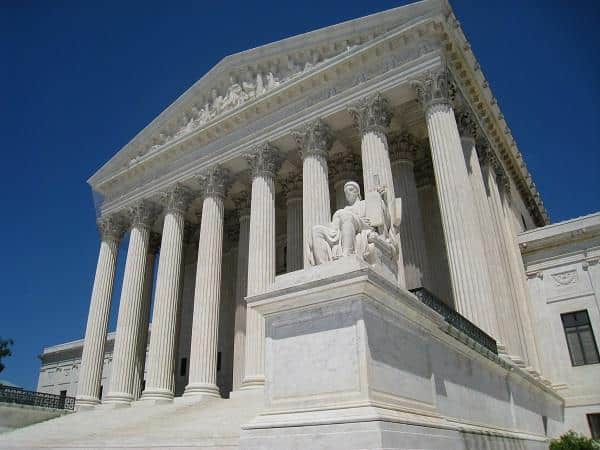
Supreme Court Just Allowed The FBI To Hack Into Any Computer, Anywhere, At Any Times
Image source: Wikipedia

The FBI soon could get the power to hack any computer, anywhere thanks to a new under-the-radar US Supreme Court decision.
A slight change to what is known as Rule 41 makes it easier than ever for Uncle Sam to do an end-run around the Fourth Amendment.
“Under the proposed rules, the government would now be able to obtain a single warrant to access and search thousands or millions of computers at once; and the vast majority of the affected computers would belong to the victims, not the perpetrators, of a cybercrime,” US Senator Ron Wyden (D-Oregon) said of the action in a press release. “This is really a big issue when you’re talking about expanding the government’s hacking and surveillance authority.”

The Supreme Court approved the tweak to Rule 41 — part of the Federal Rules of Criminal Procedure – late last month. The changes would allow a federal judge to issue a warrant authorizing the FBI agency to hack into a computer or smartphone anywhere in the US.
Under the current rules, federal judges and magistrates generally can only issue warrants within their jurisdiction. Under the new rules, a federal judge in New York could issue a warrant for an agent to hack into a computer in California.
The ruling by the Supreme Court came not in a typical court case but as part of the judge’s annual overview of the Federal Rules of Criminal Procedure, The Atlantic reported.
“These are complex issues involving privacy, digital security and our Fourth Amendment rights, which require thoughtful debate and public vetting,” Wyden complained.
The senator accused the court of making law by proposing the change. The new rule will go into effect December 1 unless Congress overturns it.
“Substantive policy changes like these are clearly a job for Congress, the American people and their elected representatives, not an obscure bureaucratic process,” Wyden said.
Google, the American Civil Liberties Union and the Electronic Frontier Foundation had written a letter to the Judicial Conference Advisory Committee on Criminal Rules, opposing the proposed change, Newsweek reported. Google argued the change would be a “substantive expansion” of the government’s search capabilities and would “authorize remote searches of millions of computers.” Significantly, the new rule allows the FBI to search any computer that is damaged or infected with malware, which one estimate placed at about 30 percent of all computers nationwide, Google claimed.
“[This] raises a number of monumental and highly complex constitutional, legal, and geopolitical concerns that should be left to Congress to decide,” Google wrote.


This article discusses the new law giving authority to the FBI all over the United States. This article was clearly biased only giving the viewpoint of the reasons that this is a bad idea. I found it interesting that Google participated in this debate voting against this new law. I think there are very sensitive issues surrounding this law. I understand that this could help the government find criminals but it also violates the privacy of its citizens.  This is a difficult situation. I found it interesting that it was mentioned that this was a place for Congress to decide. This leads to the thought that it was a different governing body that made this decision. I find this interesting that such a controversial thing could be decided by a lesser authority. 

Monday, 2 May 2016

A Weekend of Building Collapse

A member of the Kenyan security forces coordinates the search for survivors of a collapsed building in Nairobi. Severe traffic jams delayed rescue teams trying to reach the scene. PHOTO: AGENCE FRANCE-PRESSE/GETTY IMAGES
A Six-story building in Nairobi collapses killing 12, injuring 132 . Cause of collapse was attributed to “heavy rains”. Since when did it become LEGAL for heavy rains to cause the collapse of buildings? Another three-storey building in Mumbai, India collapses most of the Victims are believed to be construction workers who were involved in the building repair works.
In Nairobi, Kenya, the Red Cross said 150 building units and adjacent homes were affected. Rescuers could hear voices of five people trapped in the building and said it would be difficult to remove the concrete slabs using heavy machinery without endangering those stuck in the rubble, said nominated legislator Johnson Sakaja.
The building didn’t have an occupancy permit, which is a government requirement for all buildings, said Stephen Oundo, the chairman of the National Construction Authority. Police Inspector General Joseph Boinnet ordered the owner of the building to surrender himself to the police for questioning.
Jacob Kiruma, who said he lived in the house adjacent to the building that collapsed, said the structure had been built in less than five months and the 126 single rooms were quickly occupied at a rent of $35 a month.
Area legislator Stephen Kariuki said this was the second building to collapse in a year and blamed the county government of failing to follow through with demolitions of buildings that were identified as unfit for human habitation.
Since when did it become LEGAL for heavy rains to cause the collapse of buildings? … Or an ongoing road excavation a reasonable explanation for collapse?
Taking advantage of a high demand for housing in Nairobi, some property developers bypass building regulations to cut costs and maximize profits.
The heavy rains have caused other fatalities. Four people died when a wall collapsed Friday in the affluent Hurlingham area and two people drowned when they were swept away by floodwaters in the capital’s industrial area, said Mr. Koome, the Nairobi police chief.
Mumbai: Five people have been rescued and some are still feared trapped under the debris in R S Nimkar Marg. Source: Express photo
Report in Mumbai, India has it that SIX people died and two others suffered injuries after the collapse in Kamathipura on Saturday. The building, named Gulmohar, was over a hundred years old and was undergoing repair work, which was being overseen by the MHADA, a Building company.
Though the building was listed as a residential building, as per MHADA’S records no one was living in the building. MHADA officials said that there was a restaurant on the ground floor and a few embroidery workshops on the floors above. Onlookers said that the building completely collapsed in a matter of minutes. “There was a loud crash and the next thing we knew, the building was gone in less than five minutes. The locals and some NGOs in the area rushed to help the people who were trapped inside,” said Moinuddin Siddique, a resident of the area.
A majority of the eight rescued are believed to have been construction workers who were involved in the repair work of the building. “The people who were in the building when it collapsed include four brothers and their nephew. They had been working at the building for a month and a half and also lived there,” said Arjan Mullah, a relative of the family.
Despite being over a hundred years old, the building, as per MHADA’s records was not declared dilapidated. The repair work of the building was being funded by MLA Amin Patel who has raised questions over the inspection of the building by the MHADA officials. “If an engineer is not able to determine whether a building is dilapidated or not, what kind of an inspection is being carried out? A probe will be carried out and the persons responsible for this will be penalized,” said Patel. The work order for the repair work of Gulmohar building, which was supposed to continue for the next eight months, was issued on April 28.
The MHADA insisted that the building did not show any cracks or signs of being in a dangerous condition. “We had conducted a visual inspection of the building and had not found the building to be dilapidated. The building had a conventional structure with load bearing walls and wooden beams. There were no signs of the building being dilapidated,” said Sanjay Jadhav, the in-charge executive engineer of MHADA. Next question for all will be how come it collapsed, suddenly?
Dr S.A Oloyede, Covenant University, Ota, opined that a building, once properly constructed is expected to be in use for a very long time. Although every society has its own problems and Nigeria is not an exception yet the very recent challenges of buildings collapsing in various locations have been giving the various arms of government and the people of Nigeria sleepless nights in view of the enormous loss of huge investments in housing, properties and human life. The major challenge on the issue of building collapse is that individuals differ radically from one another on the professional to blame as the major cause of the collapse of a building.
First, building experts blamed building collapses on the use of low quality building materials coupled with employment of incompetent artisans and weak supervision of workmen on site. Second, findings revealed that the blames of building collapse were due to non-compliance with specifications/standards, use of substandard building materials and equipment and the employment of incompetent contractors. Third, opinion of the academia on remote causes of building collapse showed that the route causes are mainly the non-enforcement of existing laws and endemic poor work ethics of Nigerians at large. In addition, government all over the world should, on one hand, embark on proactive steps by mustering enough political will to allow the Town Planning Authorities to perform their functions unfettered and on the other hand, provide the legal framework that can improve and ensure smoother, less time-consuming and less burdensome ways to conduct business in the functioning of law courts.


"A Weekend of Building Collapse." 
NTA News. N.p., 1 May 2016. Web. 2 May 2016.


Response :
This article is about recent building collapses in various places around the world. The author is very biased against the building manufacturers of that country. I found this article interesting especially with my background of growing up in a country in Africa. In this country, when the heavy rains come, buildings get damaged. Usually roofs will fly off or walls will come down, and sometimes even more damage occurs. These things are just natural. I would never equate this damage to these buildings being poorly built.  It’s a new way for me to look at this. Now in my country there aren't very many six story buildings to fall down which is why it isn't such a major thing as these recent collapses. Because of my background I thought this author was being rather harsh, but now I see that this is a big deal. Lots of rules are being violated and it is resulting in death. This is something that government need to take care of. Not only do the countries mentioned need to follow up on these rules but other countries need to do it as well to ensure that these types of tragedies do not happen to them. This was an interesting article to read. 

Monday, 25 April 2016

The Latest on the Flow of Migrants into Europe

6:30 p.m.
Greece's coast guard says it rescued a total of 304 refugees and migrants at sea in eight separate operations over the last week, from April 18-25.
The coast guard said Monday it had also arrested one suspected migrant smuggler and seized four boats used to ferry people to the Greek islands from the nearby Turkish shore.
The number of refugees making the short but often dangerous crossing from Turkey to the eastern Aegean islands has dropped significantly since a European Union-Turkey deal came into effect last month.
Under the deal, those arriving from March 20 onwards face being returned to Turkey unless they successfully apply for asylum in Greece — which few want to do. The deal has been heavily criticized by human rights groups, who say it violates the rights of refugees and that Turkey is not a safe country to return them to.
———
5:15 p.m.
Queen Rania of Jordan has visited refugees and migrants on the Greek island of Lesbos, which has been one of the main gateways into Europe for people fleeing war, poverty and persecution at home.
Rania visited the Kara Tepe camp on Monday, a municipal-run facility hosting more than 800 people. Jordan is currently home to more than 1.2 million Syrians.
Rania says aid organizations had voiced "deep concern" over the recent European Union-Turkey deal under which those arriving on Greek islands after March 20 face deportation back to Turkey. She says it is "absolutely crucial for us to look for legal alternatives and more safe and effective pathways to Europe and to areas of safety."
She also says authorities need to search for sustainable, long-term solutions to the migrant crisis.
———
2:35 p.m.
Poland's Interior Ministry says it will send 120 border guards, police and migration bureau officers to Greece to help protect the European Union's borders under the mass inflow of refugees.
A communique on the ministry website said Monday that due to the "continuing migration crisis in Europe," 60 Border Guard officers and 40 police officers with the necessary equipment will soon support Europe's border protection agency, Frontex, in securing Greece's border, which is also the EU's external border.
A further 20 experts of Poland's Office for Foreigners will help with processing the migrants' requests for asylum.
Poland is refusing to accept any refugees, citing security concerns after deadly attacks in France and Belgium.
Warsaw argues support should be offered to refugees in camps nearest to their home countries.
———
2:10 p.m.
Austria has re-imposed controls on its border with Hungary, with police checking vehicles at the main regular crossings and soldiers patrolling other stretches of the border.
Police say the controls that began Monday are meant to ensure that no one crosses illegally and to prevent the smuggling of migrants into Austria and other EU nations. They have reported more such smuggling attempts into Austria since countries along the Balkan migration route closed their borders to migrants earlier this year.
Before that, tens of thousands of migrants seeking better lives in prosperous EU countries came through Hungary and then through Austria until Hungary sealed its borders last September with razor-wire fences.
Austrian police did not say how long the new border controls would remain.

"The Latest: Greece Rescues 304 Migrants at Sea in a Week." 
ABC News. Associated Press, 25 Apr. 2016. Web. 25 Apr. 2016.


This article outlines the current state of the migrant crisis in Europe. I agree with the sentiment stated by Queen Rania of Jordan. If no long term plan is put in place many people will continue to die and the countries will continue to be overwhelmed. Right now it seems that countries are just cutting off their borders and placing guards by them. This does nothing to help the crisis or the people in trouble. It won't  even keep refugees out of these countries. If there is ever going to be an end to this crisis there needs to be a permanent plan in place that will give these people a place to go. This article is slightly biased towards the refugees. It was interesting to hear about the current state of this migrant crisis. 

Tuesday, 8 March 2016

Days Of Illegal Migration To EU Over, Says Tusk

European and Turkish leaders have agreed to stem the flow of migrants and refugees who are reaching the EU through the Balkans.

Following talks in Brussels, European Council President Donald Tusk said "the days of irregular migration to Europe are over".

He added: "The flow of migrants passing from Turkey to Greece remains much too high and needs to be brought down significantly."

Turkey has confirmed it will begin to take back migrants who are apprehended in the Aegean Sea, where hundreds have drowned during desperate attempts to reach Greek islands.

It will also implement an agreement "to accept the rapid return of all migrants not in need of international protection crossing from Turkey into Greece".

A statement released after the meeting added: "The Heads of State or Government agreed that bold moves were needed to close down people smuggling routes, to break the business model of the smugglers, to protect our external borders and to end the migration crisis in Europe.

"We need to break the link between getting in a boat and getting settlement in Europe."

Mr Tusk said the EU has agreed to look at resettling some of the millions of refugees currently in Turkey.

A "one in, one out" system was proposed at the summit - where one Syrian refugee would be resettled in the EU for every person who was sent back to Turkey from Greece.

The European Commission's President, Jean-Claude Juncker, added that refugees who attempt to reach Europe illegally will be put on the bottom of the list for resettlement.

Sky's Europe Correspondent, Mark Stone, said clamping down on the well-trodden migration route will be "very difficult to try and put into place", as some EU courts may rule the measures proposed are not legal.
Another proposal will see Turkey and the EU work together to improve humanitarian conditions inside Syria, identifying "safe zones" where refugees can live.

Ahmet Davutoglu called for €3bn (£2.3bn) of EU funds already pledged for refugees to begin being used in the coming days - and warned Ankara will need a further €3bn to cope with Syrian refugees who have crossed the border into Turkey.

Greece's Prime Minister, Alexis Tsipras, said he believes many leaders were surprised at Turkey's "attractive proposals" for managing the migration crisis.

A two-day summit will begin on 17 March to finalise each commitment, but any agreement made with Turkey will come with conditions.

The country wants talks which advance its long-standing goal of joining the European Union, as well as visa-free travel for Turkish citizens travelling into the Schengen zone.

Citation: 
"Days Of Illegal Migration To EU Over, Says Tusk." 
Sky News. N.p., 8 Mar. 2016. Web. 08 Mar. 2016.


Response:
This is article proposes a possible solution for the current migration crisis. This article is biased in the way it fails to mention what will happen with the refugees while they try to implement this plan.  It will take quite some time to set up safe zones in Syria and help conditions. If the refugees are being denied entrance into other countries where are they supposed to go? The article mentions that Turkey will take some refugees but that will also take time. Turkey has "conditions" that need to be met first. This will be a long process. I understand that the countries cannot handle huge immigrations of people at one time, but I don’t think this plan will be very effective for the short term. It will help the long term, but as of right now those people are stranded. They left Syria for a reason and need to be able to find a home. I think this plan is a good concept but needs to have a short term plan as well as a long term plan.