Monday, 20 June 2016

Attempted attack in the Thalys The six detainees were released

Six people were arrested following raids carried out on Monday as part of the Instruction to the attempted attack committed in the Thalys between Paris and Amsterdam on 21 August 2015. This Monday night, these individuals were all released . Information confirmed by the federal prosecution.

Four raids were conducted in Molenbeek-Saint-Jean, a Woluwe-Saint-Lambert and Haren. Weapons or explosives were not discovered, said the federal prosecutor.

Taken for hearing

The six detainees were taken for hearing. The investigating judge in charge of the file will decide in the coming hours whether to place them under arrest. Federal prosecutors declined to give information about the identities of those arrested. The searches took place without particular incident.

The investigation continues and the benefit of it, federal prosecutors will not communicate about the issue, he said.

These searches follow the attempted attack in a Thalys train to Paris on 21 August. Ayoub El Khazzani, aged 26, was then mounted heavily armed on board the high-speed train to the Brussels-Midi station. He was then hidden in the toilet, which he had left a handmade weapon just before the train crosses the French border. Four travelers (three Americans and one British) were interposed and had mastered the individual. Three passengers were eventually injured.

A few days after the events, Ayoub El Khazzani was indicted in France for attempted murder in relation to a terrorist undertaking.

"Attempted Attack in the Thalys The Six Detainees Were Released." 
RTBF. N.p., 20 June 2016. Web. 20 June 2016.


Response:
This article discusses a recent attack on the trains in Paris. I found this article quite vague and would have liked more detail on what attacks contained or how they were carried out and then eventually how they were stopped. The partial cause of my confusion most likely stems from the language used to write the article. The article was originally in French and then google translated it into English. In this translation some of the meaning might have been lost. The author has very little bias. I found it interesting that they caught six people after searching a train as a result of a previous attack. I would have liked to know more on how that attack was prevented. IT is refreshing to hear of cases where added security has made a difference in some potentially harmful situations. 

Monday, 13 June 2016

Stories of heroism emerge from Orlando nightclub massacre

Mixed amid the chaos and confusion in the Orlando shootings were stories of heroism and heart. Instincts kicked in for some people who escaped the gunfire. They risked their safety to help save the lives of others.

The shooting and hostage situation early Sunday morning at Pulse, which describes itself as "Orlando's hottest gay bar," left at least 50 people dead, including the gunman, Omar Mateen, and more than 50 injured, officials said.

When these all-too-frequent mass shootings now happen, we talk a lot about the hate that must have inspired them, reports "CBS Evening News" anchor and managing editor Scott Pelley. But we also want to talk about the courage and survival that our fellow Americans demonstrate in the worst of circumstances.

 Eyewitness recalls Orlando mass shooting
"It just seemed like it wasn't ever gonna stop," witness Shawn Royster said.

Royster was with friends on the back patio of the Pulse Nightclub when the shooting began.

"What were you seeing and hearing in that moment?" Pelley asked him.

"Screaming, yelling. They were like dragging bodies. People that were wounded, just to get them out of the way. Sorry, sorry," Royster said, wiping away tears. "Yeah, probably the worst fear I've ever felt in my entire life, so ... I don't know. There just shouldn't be that type of hate."

But in the face of that hate came acts of heroism.

Josh McGill and friend Ashley Summers fled the club and lost track of one another. McGill found shelter behind a car.

"I was about to run for it, to the safe zone," McGill said. "And I hear someone kind of like mumbling, 'Help! Help!'"


Orlando shooting victim describes aftermath: "This is a nightmare"
A few feet away, 27-year-old Rodney Sumter Jr. lay wounded and bleeding, shot in each arm and once in the back.

"I only saw the one bullet at first, and I was like, 'We need to stop the bleeding.' And he's like, 'Okay.' So I took my shirt off and I tied it around as tight as I could and then I saw his other arm had been shot. So I took his shirt off, tied it around that one," McGill recounted.

The two hobbled their way to police at the scene.

"So the police officer turned to me and said, 'Okay, this is what the deal is. You're going to lay down in the back of that cop car and he's going to lay on top of you, and I want you to bear hug him and try to keep all the pressure on him as you can.' So I did," McGill said. "And they were like 'Also, like keep him conscious.'"

McGill held Sumter all the way to the hospital.

"I was like, 'I don't know if you're religious but I feel like I need to say a prayer. You're going to be fine.' I was like, 'I got you, man,'" McGill said.


"Orlando Nightclub Shooting: Stories of Heroism Emerge from Deadly Rampage." 
CBSNews. CBS Interactive, 13 June 2016. Web. 13 June 2016.


This article is about the Orlando shooting that happened on Sunday Night. Instead of focusing on the shooting itself and the negative aspects of it, this article focuses on a man who most likely saved someone's life. This article has a bias towards McGill. It talks about how he tried to save someone's life. I think it would have been nice if the article had elaborated on the shooting itself and then gone into the heroism that arose from it. This article left me wondering how the shooting was resolved and the shooter killed. It also would have been nice if the article had mentioned if Rodney Sumter Jr. had lived. I think that it is refreshing that in the midst of all this destruction and terrorism in the world there are still positive things to find. This article can remind us of the love we should have for our neighbors.

Tuesday, 7 June 2016

U.S. Lifts Decades-Long Embargo on Arms Sales to Vietnam


Barack Obama announces removal of ban on first visit, saying there is a new level of trust and cooperation with former enemy

The US has lifted a decades-old arms embargo on Vietnam in a historic move that follows the country’s growing assertiveness against China’s influence in the region.

Speaking on a visit to Hanoi, Barack Obama said Washington had fully lifted “the ban on the sale of military equipment to Vietnam that has been in place for some 50 years”. Obama is the third American president – after Bill Clinton and George W Bush – to visit since the war ended in 1975.

“At this stage both sides have developed a level of trust and cooperation,” he added during a joint press conference with the Vietnamese president, Tran Dai Quang.

Quang said the end to the embargo was “clear proof that both countries have completely normalised relations”.

Despite a shared communist ideology, Vietnam is one of several countries engaged in a fierce territorial dispute with Beijing over islands and reefs in the South China Sea, a route for roughly £3.17tn in trade. The area is also thought to have significant oil and gas reserves.

China has reclaimed several atolls that Vietnam says it owns, and built military installations and runways on some islands.

Vietnam, a country of 90 million, has also been a key partner for the Trans Pacific Partnership (TPP), a US-led trade deal seen as a counter to China’s growing influence.

However, Obama said the decision to lift the ban was not based on China but on “our desire to complete what has been a lengthy process towards moving toward normalisation with Vietnam”.

The Chinese state-run newspaper Global Times ran an editorial titled “Obama unable to turn Hanoi into an ally” and said while Beijing was a major opponent of Hanoi regarding the South China Sea, “the former is also considered by Hanoi’s mainstream elites as a political pillar for Vietnam’s stability”.

Activist groups have called for Obama to push for greater respect for human rights in Vietnam, where there are about 100 political prisoners in jail. In March, seven activists were sentenced for “spreading anti-state propaganda”.

The ruling Communist party has run a one-party state since 1954.

There has also been a recent round of arrests against environmental protesters, angered after 100 tonnes of dead fish were found near a Taiwanese-owned industrial complex.

The Vietnamese government has cracked down on any attempt to protest, blocking access to Facebook over the weekend.

And on Sunday, the BBC reporting team was told their accreditation to cover Obama’s visit had been withdrawn without reason.

Obama said on Monday that any future arms sales would need to meet strict requirements “including those related to human rights”.

Phil Robertson, the deputy Asia director for Human Rights Watch, criticised the move.

“Obama has jettisoned what remained of US leverage to improve human rights in Vietnam – and basically gotten nothing for it,” he said.

“The United States government has been telling the Vietnam government for years that they need to show progress on their human rights record if they are going to be rewarded with closer military and economic ties. Yet today President Obama has rewarded Vietnam even though they have not done anything of note.”

Diplomatic ties between the US and Vietnam were restored in 1995. In 2007, the US allowed the sale of some non-lethal equipment and last December, Washington said it would provide five unarmed patrol boats to the Vietnamese coastguard.

Following his three-day trip in Vietnam, Obama will travel to Japan for a G7 summit and a visit to Hiroshima.


Citation:
Holmes, Oliver. "US Lifts Decades-long Embargo on Arms Sales to Vietnam." 
The Guardian. Guardian News and Media, 23 May 2016. Web. 07 June 2016.


This article is discussing Obama's recent trip to Vietnam. Their relations have been strained in the past America has refused to sell them any arms. Obama has change this and agreed to lift the arms ban against them. This article mentioned some arguments for both sides of this issue but had a bias against what Obama decided to do. The article mentions that Vietnam has made no move to improve human rights and states that Obama rewarded them without cause and this will make matters worse. This statement shows the bias of the article. I found it interesting in how this truce relates to affairs regarding China. It will be interesting to see how China's relations change in the next couple of years.

Tuesday, 10 May 2016

Computer Privacy?

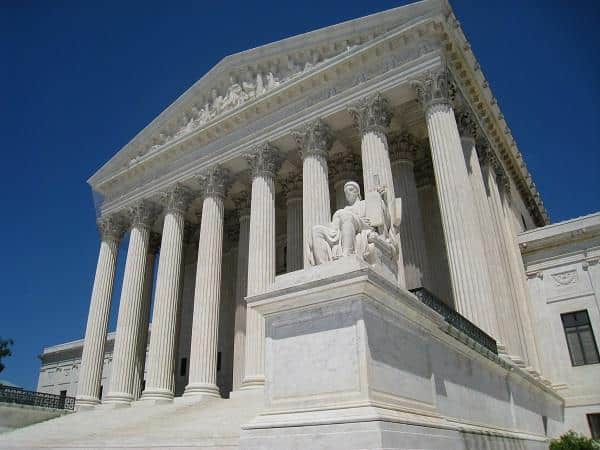
Supreme Court Just Allowed The FBI To Hack Into Any Computer, Anywhere, At Any Times
Image source: Wikipedia

The FBI soon could get the power to hack any computer, anywhere thanks to a new under-the-radar US Supreme Court decision.
A slight change to what is known as Rule 41 makes it easier than ever for Uncle Sam to do an end-run around the Fourth Amendment.
“Under the proposed rules, the government would now be able to obtain a single warrant to access and search thousands or millions of computers at once; and the vast majority of the affected computers would belong to the victims, not the perpetrators, of a cybercrime,” US Senator Ron Wyden (D-Oregon) said of the action in a press release. “This is really a big issue when you’re talking about expanding the government’s hacking and surveillance authority.”

The Supreme Court approved the tweak to Rule 41 — part of the Federal Rules of Criminal Procedure – late last month. The changes would allow a federal judge to issue a warrant authorizing the FBI agency to hack into a computer or smartphone anywhere in the US.
Under the current rules, federal judges and magistrates generally can only issue warrants within their jurisdiction. Under the new rules, a federal judge in New York could issue a warrant for an agent to hack into a computer in California.
The ruling by the Supreme Court came not in a typical court case but as part of the judge’s annual overview of the Federal Rules of Criminal Procedure, The Atlantic reported.
“These are complex issues involving privacy, digital security and our Fourth Amendment rights, which require thoughtful debate and public vetting,” Wyden complained.
The senator accused the court of making law by proposing the change. The new rule will go into effect December 1 unless Congress overturns it.
“Substantive policy changes like these are clearly a job for Congress, the American people and their elected representatives, not an obscure bureaucratic process,” Wyden said.
Google, the American Civil Liberties Union and the Electronic Frontier Foundation had written a letter to the Judicial Conference Advisory Committee on Criminal Rules, opposing the proposed change, Newsweek reported. Google argued the change would be a “substantive expansion” of the government’s search capabilities and would “authorize remote searches of millions of computers.” Significantly, the new rule allows the FBI to search any computer that is damaged or infected with malware, which one estimate placed at about 30 percent of all computers nationwide, Google claimed.
“[This] raises a number of monumental and highly complex constitutional, legal, and geopolitical concerns that should be left to Congress to decide,” Google wrote.


This article discusses the new law giving authority to the FBI all over the United States. This article was clearly biased only giving the viewpoint of the reasons that this is a bad idea. I found it interesting that Google participated in this debate voting against this new law. I think there are very sensitive issues surrounding this law. I understand that this could help the government find criminals but it also violates the privacy of its citizens.  This is a difficult situation. I found it interesting that it was mentioned that this was a place for Congress to decide. This leads to the thought that it was a different governing body that made this decision. I find this interesting that such a controversial thing could be decided by a lesser authority. 

Monday, 2 May 2016

A Weekend of Building Collapse

A member of the Kenyan security forces coordinates the search for survivors of a collapsed building in Nairobi. Severe traffic jams delayed rescue teams trying to reach the scene. PHOTO: AGENCE FRANCE-PRESSE/GETTY IMAGES
A Six-story building in Nairobi collapses killing 12, injuring 132 . Cause of collapse was attributed to “heavy rains”. Since when did it become LEGAL for heavy rains to cause the collapse of buildings? Another three-storey building in Mumbai, India collapses most of the Victims are believed to be construction workers who were involved in the building repair works.
In Nairobi, Kenya, the Red Cross said 150 building units and adjacent homes were affected. Rescuers could hear voices of five people trapped in the building and said it would be difficult to remove the concrete slabs using heavy machinery without endangering those stuck in the rubble, said nominated legislator Johnson Sakaja.
The building didn’t have an occupancy permit, which is a government requirement for all buildings, said Stephen Oundo, the chairman of the National Construction Authority. Police Inspector General Joseph Boinnet ordered the owner of the building to surrender himself to the police for questioning.
Jacob Kiruma, who said he lived in the house adjacent to the building that collapsed, said the structure had been built in less than five months and the 126 single rooms were quickly occupied at a rent of $35 a month.
Area legislator Stephen Kariuki said this was the second building to collapse in a year and blamed the county government of failing to follow through with demolitions of buildings that were identified as unfit for human habitation.
Since when did it become LEGAL for heavy rains to cause the collapse of buildings? … Or an ongoing road excavation a reasonable explanation for collapse?
Taking advantage of a high demand for housing in Nairobi, some property developers bypass building regulations to cut costs and maximize profits.
The heavy rains have caused other fatalities. Four people died when a wall collapsed Friday in the affluent Hurlingham area and two people drowned when they were swept away by floodwaters in the capital’s industrial area, said Mr. Koome, the Nairobi police chief.
Mumbai: Five people have been rescued and some are still feared trapped under the debris in R S Nimkar Marg. Source: Express photo
Report in Mumbai, India has it that SIX people died and two others suffered injuries after the collapse in Kamathipura on Saturday. The building, named Gulmohar, was over a hundred years old and was undergoing repair work, which was being overseen by the MHADA, a Building company.
Though the building was listed as a residential building, as per MHADA’S records no one was living in the building. MHADA officials said that there was a restaurant on the ground floor and a few embroidery workshops on the floors above. Onlookers said that the building completely collapsed in a matter of minutes. “There was a loud crash and the next thing we knew, the building was gone in less than five minutes. The locals and some NGOs in the area rushed to help the people who were trapped inside,” said Moinuddin Siddique, a resident of the area.
A majority of the eight rescued are believed to have been construction workers who were involved in the repair work of the building. “The people who were in the building when it collapsed include four brothers and their nephew. They had been working at the building for a month and a half and also lived there,” said Arjan Mullah, a relative of the family.
Despite being over a hundred years old, the building, as per MHADA’s records was not declared dilapidated. The repair work of the building was being funded by MLA Amin Patel who has raised questions over the inspection of the building by the MHADA officials. “If an engineer is not able to determine whether a building is dilapidated or not, what kind of an inspection is being carried out? A probe will be carried out and the persons responsible for this will be penalized,” said Patel. The work order for the repair work of Gulmohar building, which was supposed to continue for the next eight months, was issued on April 28.
The MHADA insisted that the building did not show any cracks or signs of being in a dangerous condition. “We had conducted a visual inspection of the building and had not found the building to be dilapidated. The building had a conventional structure with load bearing walls and wooden beams. There were no signs of the building being dilapidated,” said Sanjay Jadhav, the in-charge executive engineer of MHADA. Next question for all will be how come it collapsed, suddenly?
Dr S.A Oloyede, Covenant University, Ota, opined that a building, once properly constructed is expected to be in use for a very long time. Although every society has its own problems and Nigeria is not an exception yet the very recent challenges of buildings collapsing in various locations have been giving the various arms of government and the people of Nigeria sleepless nights in view of the enormous loss of huge investments in housing, properties and human life. The major challenge on the issue of building collapse is that individuals differ radically from one another on the professional to blame as the major cause of the collapse of a building.
First, building experts blamed building collapses on the use of low quality building materials coupled with employment of incompetent artisans and weak supervision of workmen on site. Second, findings revealed that the blames of building collapse were due to non-compliance with specifications/standards, use of substandard building materials and equipment and the employment of incompetent contractors. Third, opinion of the academia on remote causes of building collapse showed that the route causes are mainly the non-enforcement of existing laws and endemic poor work ethics of Nigerians at large. In addition, government all over the world should, on one hand, embark on proactive steps by mustering enough political will to allow the Town Planning Authorities to perform their functions unfettered and on the other hand, provide the legal framework that can improve and ensure smoother, less time-consuming and less burdensome ways to conduct business in the functioning of law courts.


"A Weekend of Building Collapse." 
NTA News. N.p., 1 May 2016. Web. 2 May 2016.


Response :
This article is about recent building collapses in various places around the world. The author is very biased against the building manufacturers of that country. I found this article interesting especially with my background of growing up in a country in Africa. In this country, when the heavy rains come, buildings get damaged. Usually roofs will fly off or walls will come down, and sometimes even more damage occurs. These things are just natural. I would never equate this damage to these buildings being poorly built.  It’s a new way for me to look at this. Now in my country there aren't very many six story buildings to fall down which is why it isn't such a major thing as these recent collapses. Because of my background I thought this author was being rather harsh, but now I see that this is a big deal. Lots of rules are being violated and it is resulting in death. This is something that government need to take care of. Not only do the countries mentioned need to follow up on these rules but other countries need to do it as well to ensure that these types of tragedies do not happen to them. This was an interesting article to read. 

Monday, 25 April 2016

The Latest on the Flow of Migrants into Europe

6:30 p.m.
Greece's coast guard says it rescued a total of 304 refugees and migrants at sea in eight separate operations over the last week, from April 18-25.
The coast guard said Monday it had also arrested one suspected migrant smuggler and seized four boats used to ferry people to the Greek islands from the nearby Turkish shore.
The number of refugees making the short but often dangerous crossing from Turkey to the eastern Aegean islands has dropped significantly since a European Union-Turkey deal came into effect last month.
Under the deal, those arriving from March 20 onwards face being returned to Turkey unless they successfully apply for asylum in Greece — which few want to do. The deal has been heavily criticized by human rights groups, who say it violates the rights of refugees and that Turkey is not a safe country to return them to.
———
5:15 p.m.
Queen Rania of Jordan has visited refugees and migrants on the Greek island of Lesbos, which has been one of the main gateways into Europe for people fleeing war, poverty and persecution at home.
Rania visited the Kara Tepe camp on Monday, a municipal-run facility hosting more than 800 people. Jordan is currently home to more than 1.2 million Syrians.
Rania says aid organizations had voiced "deep concern" over the recent European Union-Turkey deal under which those arriving on Greek islands after March 20 face deportation back to Turkey. She says it is "absolutely crucial for us to look for legal alternatives and more safe and effective pathways to Europe and to areas of safety."
She also says authorities need to search for sustainable, long-term solutions to the migrant crisis.
———
2:35 p.m.
Poland's Interior Ministry says it will send 120 border guards, police and migration bureau officers to Greece to help protect the European Union's borders under the mass inflow of refugees.
A communique on the ministry website said Monday that due to the "continuing migration crisis in Europe," 60 Border Guard officers and 40 police officers with the necessary equipment will soon support Europe's border protection agency, Frontex, in securing Greece's border, which is also the EU's external border.
A further 20 experts of Poland's Office for Foreigners will help with processing the migrants' requests for asylum.
Poland is refusing to accept any refugees, citing security concerns after deadly attacks in France and Belgium.
Warsaw argues support should be offered to refugees in camps nearest to their home countries.
———
2:10 p.m.
Austria has re-imposed controls on its border with Hungary, with police checking vehicles at the main regular crossings and soldiers patrolling other stretches of the border.
Police say the controls that began Monday are meant to ensure that no one crosses illegally and to prevent the smuggling of migrants into Austria and other EU nations. They have reported more such smuggling attempts into Austria since countries along the Balkan migration route closed their borders to migrants earlier this year.
Before that, tens of thousands of migrants seeking better lives in prosperous EU countries came through Hungary and then through Austria until Hungary sealed its borders last September with razor-wire fences.
Austrian police did not say how long the new border controls would remain.

"The Latest: Greece Rescues 304 Migrants at Sea in a Week." 
ABC News. Associated Press, 25 Apr. 2016. Web. 25 Apr. 2016.


This article outlines the current state of the migrant crisis in Europe. I agree with the sentiment stated by Queen Rania of Jordan. If no long term plan is put in place many people will continue to die and the countries will continue to be overwhelmed. Right now it seems that countries are just cutting off their borders and placing guards by them. This does nothing to help the crisis or the people in trouble. It won't  even keep refugees out of these countries. If there is ever going to be an end to this crisis there needs to be a permanent plan in place that will give these people a place to go. This article is slightly biased towards the refugees. It was interesting to hear about the current state of this migrant crisis. 

Tuesday, 8 March 2016

Days Of Illegal Migration To EU Over, Says Tusk

European and Turkish leaders have agreed to stem the flow of migrants and refugees who are reaching the EU through the Balkans.

Following talks in Brussels, European Council President Donald Tusk said "the days of irregular migration to Europe are over".

He added: "The flow of migrants passing from Turkey to Greece remains much too high and needs to be brought down significantly."

Turkey has confirmed it will begin to take back migrants who are apprehended in the Aegean Sea, where hundreds have drowned during desperate attempts to reach Greek islands.

It will also implement an agreement "to accept the rapid return of all migrants not in need of international protection crossing from Turkey into Greece".

A statement released after the meeting added: "The Heads of State or Government agreed that bold moves were needed to close down people smuggling routes, to break the business model of the smugglers, to protect our external borders and to end the migration crisis in Europe.

"We need to break the link between getting in a boat and getting settlement in Europe."

Mr Tusk said the EU has agreed to look at resettling some of the millions of refugees currently in Turkey.

A "one in, one out" system was proposed at the summit - where one Syrian refugee would be resettled in the EU for every person who was sent back to Turkey from Greece.

The European Commission's President, Jean-Claude Juncker, added that refugees who attempt to reach Europe illegally will be put on the bottom of the list for resettlement.

Sky's Europe Correspondent, Mark Stone, said clamping down on the well-trodden migration route will be "very difficult to try and put into place", as some EU courts may rule the measures proposed are not legal.
Another proposal will see Turkey and the EU work together to improve humanitarian conditions inside Syria, identifying "safe zones" where refugees can live.

Ahmet Davutoglu called for €3bn (£2.3bn) of EU funds already pledged for refugees to begin being used in the coming days - and warned Ankara will need a further €3bn to cope with Syrian refugees who have crossed the border into Turkey.

Greece's Prime Minister, Alexis Tsipras, said he believes many leaders were surprised at Turkey's "attractive proposals" for managing the migration crisis.

A two-day summit will begin on 17 March to finalise each commitment, but any agreement made with Turkey will come with conditions.

The country wants talks which advance its long-standing goal of joining the European Union, as well as visa-free travel for Turkish citizens travelling into the Schengen zone.

Citation: 
"Days Of Illegal Migration To EU Over, Says Tusk." 
Sky News. N.p., 8 Mar. 2016. Web. 08 Mar. 2016.


Response:
This is article proposes a possible solution for the current migration crisis. This article is biased in the way it fails to mention what will happen with the refugees while they try to implement this plan.  It will take quite some time to set up safe zones in Syria and help conditions. If the refugees are being denied entrance into other countries where are they supposed to go? The article mentions that Turkey will take some refugees but that will also take time. Turkey has "conditions" that need to be met first. This will be a long process. I understand that the countries cannot handle huge immigrations of people at one time, but I don’t think this plan will be very effective for the short term. It will help the long term, but as of right now those people are stranded. They left Syria for a reason and need to be able to find a home. I think this plan is a good concept but needs to have a short term plan as well as a long term plan. 

Monday, 29 February 2016

Freed Australian hostage Jocelyn Elliott vows to continue work in Burkina Faso, focus turns to saving husband Ken

Burkina Faso former hostage Jocelyn Elliott looks into the camera with a straight face.
An Australian woman who was kidnapped by Al-Qaeda-linked jihadists in Burkina Faso has returned to the nation's capital after being freed, and says she hopes to be reunited with her husband so they can continue their medical work in the African nation.

Key points:

Jocelyn and Ken Elliott were kidnapped in Burkina Faso more than three weeks ago
Ms Elliott has been freed and has now returned to Burkina Faso's capital
Work continues to free her husband, who has worked as a doctor in the nation since 1972
Ms Elliott hopes they can continue their medical work in the country
Jocelyn Elliott and her husband doctor Ken Elliott, who are originally from Perth, were abducted in Burkina Faso close to the Niger border more than three weeks ago.

Ms Elliott was freed over the weekend following mediation by neighboring Niger, which is now trying to secure her husband's release.

She arrived in Ouagadougou, Burkina Faso's capital, on Monday aboard a Niger presidential plane accompanied by Niger's Foreign Minister, Aichatou Kane Boualama.

Ms Elliott was taken to the presidential palace, where she was greeted by head of state Roch Marc Christian Kabore.

"I am very moved to be here with my Burkina family. I want to thank the people of Burkina for their support in my absence," she said in French.

"I want to be with my husband shortly so that we can go to Djibo and continue there."

The Elliotts have run the sole medical clinic in the dusty town of Djibo, close to the border with Mali, since 1972.

She also expressed her gratitude to "the governments of Niger, Burkina Faso and Australia" and clarified she is aged 76 and her husband is 81.

Their ages had previously been given by officials as 84 and 82 respectively.

On Sunday Niger's President Mahamadou Issoufour confirmed his nation had mediated with the captors, but did not give details on either the circumstances or the location of her release.

"I think those who abducted them should know the contribution this couple have made to the poorest people in our regions. I hope they will be back together soon and that Jocelyn's husband will soon go free," Mr Issoufour said.

Australian Prime Minister Malcolm Turnbull earlier thanked Niger and Burkina Faso for their efforts, while the Elliott family released a statement saying they were "deeply grateful" for Jocelyn's release.

"We are trusting that the moral and guiding principles of those who have released our mother will also be applied to our elderly father who has served the community of Djibo and the Sahel for more than half his lifetime," the statement said.

Focus shifts to saving Dr Elliott

Malian militant group Ansar Dine said the couple had been taken by jihadists from the "Emirate of the Sahara" - said by experts to be a branch of Al-Qaeda in the Islamic Maghreb.

Mr Barry said the focus was now on securing Dr Elliott's release.

"For now we know that her husband is alive and well. Now further negotiations will begin for his release and we will do everything to secure it," Mr Barry said.

He confirmed "no ransom was paid or conditions imposed" by the kidnappers for the release of Mrs Elliott.

The Burkina Government said the pair were kidnapped in Baraboule, near the country's borders with both Niger and Mali.

The kidnapping prompted an outpouring of support, with the people of Djibo turning to Facebook to plead for the couple's release and hundreds of students with placards reading "Free Elliott" taking to the streets of the town with their teachers.

Their abduction coincided with a jihadist assault on an upmarket hotel in Burkina Faso's capital Ouagadougou left at least 29 people dead, including at least 13 foreigners.

Until recently Burkina Faso had largely escaped the tide of Islamist violence spreading in the restive Sahel region, but the January attack on the Splendid Hotel which is popular with foreigners and United Nations staff, has heightened fears that jihadist groups are casting their net wider in west Africa.


"Freed Australian Hostage Jocelyn Elliott Vows to Continue Work in Burkina Faso, Focus Turns to Saving Husband Ken." ABC News. N.p., 8 Feb. 2016. Web. 29 Feb. 2016.

This article discusses the recent release of an Australian hostage from Burkina Faso. There is little bias in this article except that it shows a favorable light on the Elliotts and what they are doing in Burkina Faso. I found it interesting that the author did not mention anything about Jocelyn's time as a hostage but only that she had been returned. The article also doesn't mention whether or not the Elliotts are Christians. I hope and pray that the people from Niger will be able to get her husband released soon. I find it interesting that they choose to stay in Burkina Faso and not go back to Australia after such an event. This was an interesting article. 

Tuesday, 23 February 2016

Fiji hit by Record Breaking Cyclone

Downed power lines and flooding are hampering relief efforts in Fiji after one of the most powerful storms recorded in the southern hemisphere tore through the Pacific island nation, flattening remote villages and killing at least 18 people.
On Monday, officials were scrambling to restore services and assess damage caused on Saturday by tropical cylone Winston in remote parts of the Pacific Island chain.
Harsh winds and torrential rains tore up hundreds of homes and cut power, water and communications links across the nation of about 900,000 people, although Suva, the capital, escaped the brunt after the storm changed direction at the last minute. 
Prime Minister Frank Bainimarama declared a 30-day state of emergency, with schools ordered to shut and a nationwide curfew extended until Monday morning.
"When we are able we will provide timelines for the return of water and power," he said, adding that electricity supply to some areas had been deliberately cut to avert further damage.
The archipelago of about 300 islands — about 100 are inhabited — hit late on Saturday by the tropical cyclone, which packed winds of 143 miles per hour that gusted up to 202 miles per hour.
Getting emergency supplies to the group's far-flung islands and remote communities was the government's top priority said Ewan Perrin, Fiji's permanent secretary for communications. 
"The logistics of getting supplies and equipment to remote communities is difficult," he said. "Some have lost their jetties and it's uncertain if airstrips are able to be landed on."
Perrin said authorities on Monday were sending a vessel to Koro Island filled with medical supplies, food and water. He said crews on the boat would build temporary shelters for those people on the island whose homes had been destroyed.
Perrin said the electricity network across Fiji remained patchy, and in some cases power had been deliberately cut to prevent further damage. He said clean water was also a challenge, and people were being asked to boil their water, treat it with chemicals or drink bottled water.
Phone communications had been rapidly restored in many areas but in other areas the damage was severe and would take longer to fix, he said.
He said Fijians were taking the disaster in stride.
"The people here are fairly resilient and they're accustomed to these things happening," he said. "Most are going about their business or helping clean up. There's been a very well-coordinated disaster response and we're deploying quickly."
Perrin said most of the people who died in the cyclone were hit by flying debris or were in buildings which collapsed. A handful of people had also been hospitalized with severe injuries, he said.
Humanitarian agencies warned Fiji may be facing a potential health crisis, mainly due to the lack of electricity. Low-lying river areas where hundreds of people live in tin sheds are also particularly vulnerable, aid workers said.
"We need electricity to ensure pumps are working and for sterilization," Raijeli Nicole, an official of aid agency Oxfam, told Reuters by telephone that flights have been scheduled on Sunday to assess damage in remote areas.
George Dregaso of Fiji's National Disaster Management Office said that two people on Ovalau Island died when the house they were sheltering in collapsed on them, and that another man was killed on Koro Island, although it wasn't clear how he died.
About 80 percent of the nation's population was without regular power, although about one-third of them were able to get some electricity from generators, said Dregaso. Landlines throughout Fiji were down, but most mobile networks were working.
Dregaso said 483 people evacuated their homes and were staying in 32 emergency shelters. He said he expected the number of evacuees to rise.
"Some villages have reported that all homes have been destroyed," Jone Tuiipelehaki of the United Nations Development Program tweeted late on Saturday.
People flocked to 758 evacuation centers on Saturday, while tourists hunkered down in hotel ballrooms and conference rooms in coastal areas.
"The images that we're starting to see roll in are terrifying," Alice Clements, a UNICEF official based in Suva said by telephone, describing visuals of a car on a building roof and a small plane nose down in debris.
Australian Foreign Minister Julie Bishop, who offered to send a P-3 Orion aircraft to help in the relief effort, said about 1,200 Australians were registered as being in Fiji, although there could be many more.
Australians are frequent travelers to the archipelago, which gets around 340,000 tourists each year. Airlines Virgin and Jetstar on Saturday suspended flights to Fiji, and the national carrier suspended all flights.

"Fiji Hit by Record-breaking Cyclone." Aljazeera America. N.p., 21 Feb. 2016. Web. 22 Feb. 2016.

This article discusses a recent cyclone that hit Fiji. The author if this article has a slight bias towards Fiji as it shows ways in which Fiji has reacted well to this crisis. I think what has happened in Fiji is really sad. A lot of houses were destroyed. It says in the article that "all homes have been destroyed" in some villages. This is causing many people to seek emergency shelters. This makes Fiji a health risk as it mentions in the article. Given the current state of Fiji after this cyclone a health epidemic would be another disaster that would be hard to quell. This author assumes that the readers would have a general knowledge of the geography of Fiji. This is why the author does not go into detail of the places of the different islands pf Fiji and where they are located in relation to where the storm hit.  This article has many statements by people in Fiji to support their article if the impact of the cyclone. Almost all of the evidence the article provides are statements. Most are statements made by government officials or people working in major organizations, so the statements are more credible. This author makes a statement saying that this is "one of the most powerful storms recorded in the southern hemisphere." This shows some context of other storms that have happened in the same general area. The article also briefly mentions the fact the Fijians are used to these situations. This implies a pattern with these kinds of storms. It will be interesting to see how the government in Fiji handles the blowout of this disaster, and whether or not they will be able to reach isolated areas before more damage is done. This article has a very optimistic opinion, but if one searches this disaster up on google, it is evident that more harm has come to the people of Fiji as a result of this disaster. This will affect Fiji in the years to come economically and socially.


Monday, 8 February 2016

North Korea's Rocket Launch

North Korea moved up the window of its planned long-range rocket launch to as early as Sunday in defiance of outside governments who suspect a banned test of ballistic missile technology, South Korea's Defense Ministry said Saturday.

North Korea, which says it will attempt to place a satellite in orbit, informed the International Maritime Organization it moved up the launch window from Feb. 8-25 to Feb. 7-14, Japan's Kyodo News Service reported. No reason was given for the change.

"I can confirm that we have detected a missile launch from North Korea," said a defense official who spoke on the condition of anonymity because he is not authorized to speak publicly. "Based upon its trajectory as we are tracking it, it does not pose a threat to the U.S. or our allies

While the North claims such efforts are a benign attempt to develop the capability for putting satellites into space, outside governments say it is a cover for testing ballistic missiles. That move would constitute yet another major violation of U.N. Security Council resolutions banning Pyongyang from carrying out any nuclear or ballistic missile tests.

Notifications to the International Maritime Organization are intended to alert seagoing traffic that might be in the area. North Korea did not inform international organizations of any other changes in its plan, and the rocket's expected flight path remains the same, said South Korean Defense Ministry spokesman Moon Sang Gyun.

Recent commercial satellite imagery analyzed by U.S. researchers showed tanker trucks at the launch pad at North Korea's Sohae facility, which likely indicates the filling of fuel and oxidizer tanks in preparation for the launch, the Associated Press reported. It is not yet clear if a rocket is on the launch pad yet, according to the North Korea-focused 38 North website.

An official from the Korea Meteorological Administration, South Korea's weather agency, said rain or snow is expected in the North Korean region where the launch pad is located Monday, Thursday and next Saturday. He spoke on condition of anonymity, citing office rules, the AP reported.

The revised plan comes weeks after North Korea conducted its fourth nuclear test. International governments worry nuclear tests and long-range missile launches signal the North is getting closer to creating a nuclear warhead small enough to fit on an intercontinental missile capable of reaching targets as far away as the U.S. West Coast.

North Korea tested nuclear explosive devices in 2006, 2009 and 2013, and claimed it successfully delivered a satellite into orbit in December 2012, the last time it launched a long-range rocket.

South Korean analysts speculate the secretive North Korean leadership, which is sensitive to symbolic gestures, might be trying to pull off the launch ahead of Feb. 16, the birthday of late dictator Kim Jong Il, the father of current leader Kim Jong Un.

The South Korean defense ministry said Seoul and the U.S. are deploying key military assets, including the South's Aegis-equipped destroyers and radar spy planes, to track the North Korean rocket after its launch. The U.S. stations more than 28,000 troops in the South as a buttress against North Korean aggression.

The Seoul government said it will stay on full alert for the possible launch, South Korea's Yonhap news agency reported.

Pyongyang's announcement prompted Japan's Foreign Ministry to set up an emergency response desk to monitor and prepare for the launch. Japan deployed Patriot missile batteries in Tokyo and on the southern island of Okinawa to shoot down any debris from the rocket that might threaten to fall on its territory.

On Friday, President Obama spoke by phone with President Xi Jinping of China, North Korea's only major ally, and the two sides agreed a launch would represent a "provocative and destabilizing action," the White House said.

The two leaders said they would coordinate their responses to Pyongyang's recent nuclear test and would not accept North Korea as a nuclear weapon state.

"The leaders emphasized the importance of a strong and united international response to North Korea's provocations, including through an impactful U.N. Security Council Resolution," the White House said.

China, however, is unlikely to join any likely call by the U.S. and South Korea to tighten sanctions against North Korea. Beijing worries a strong economic move against North Korea might provoke a regime collapse and send refugees streaming across the border, analysts say. China is responsible for about 70% of the North's trade volume, according to South Korean estimates.


Stanglin, Doug. "South Korea: North Korea Moves up Rocket Launch Window to next Week." 
USA Today. N.p., 6 Feb. 2016. Web. 8 Feb. 2016.


This article discusses a recent threat of a rocket launch by North Korea. This article has a clear bias. The author does not present the information in any way that could rationalize the actions of North Korea. The author only portrays the worries of outside countries. This article is biased against North Korea. I think that North Korea has made many recent attempts at rockets and missile tests. This is putting many countries on edge. Because North Korea's leader is so young, he doesn’t appear to be thinking rationally. Even North Korea's main ally is against their most recent move. I think this push by the North Korean government will result in a fall  out. It will be interesting to see who that fall out will be between. 

Wednesday, 3 February 2016

North Korea's Threat

North Korea’s planned launch of a long-range rocket has set the world on edge, particularly since the regime announced it would be attaching a satellite to its device that would give it spy eyes in the sky.

The launch will put what North Korea has named Kwangmyongson, or Bright Star, into the orbit, an Earth observation satellite, the Associated Press reported. It’s due to go forth between February 8 and February 27, the International Maritime Organization said, citing a letter from Pyongyang.

The United States, South Korea and Japan all expressed anger with the planned launch, with South Korean presidential security adviser Cho Tae Yong warning the regime it would pay a “severe price” for the move, AP reported. Japan Prime Minister Shinzo Abe, meanwhile, said to his country’s parliamentary members the missile launch is a serious threat and potential provocation.

America issued a statement denouncing the launch as well.

“This act would violate numerous Security Council resolutions by utilizing proscribed ballistic missile technology,” U.S. State Department spokesman John Kirby said to the press, AP reported. “It also comes on the heels, as you know, of the January 6th nuclear test, which is itself an egregious violation of U.N. Security Council resolutions.”


"North Korea’s Planned Launch Angers World." 
WND. N.p., 3 Feb. 2016. Web. 3 Feb. 2016.


This article discusses a missile threat made by the North Koreans. This article does not express a lot of information about the threat but that information might not be available. This article is biased as it only expresses the views of countries that are strongly opposed to this threat of launch. I think North Korea is trying to establish itself as a viable threat to other nations and this is how they chose to do that. The timing of this threat is a main part of this plan. This threat comes directly after a nuclear test. This test establishes the credibility of this threat. It will be interesting to see hoe the UN responds to this threat. 


Friday, 15 January 2016

Taiwan Presidential Campaign

Taiwan Presidential Race Showcases Women's Increasing Role
Taiwan appears all but certain to elect a female president on Saturday, underscoring the vast political gains women have made over the island's decades-long transition from authoritarianism to thriving democracy.
While the Democratic Progressive Party's Tsai Ing-wen would hardly be the first Asian woman elected head of state, she would be the first to rise to the top without having been the wife, daughter or sibling of a powerful man.
About a third of the 113 lawmakers elected to the Legislative Yuan, Taiwan's parliament in the last polls in 2012 were women. In Asia, only East Timor has a higher percentage, according to the Inter-Parliamentary Union. Women make up about 20 percent of the U.S. Congress.
The picture is much different in China, the one-party communist behemoth which claims Taiwan as its own territory. No women sit on the Politburo Standing Committee, the apex of communist power, and just two on the 25-member Politburo one rung below it.
Tsai, who holds a Ph.D. from the London School of Economics, has said that while a woman president would be a sign of further social progress, the Taiwanese public seems more than ready for such a development.
"Of course, there are some people in Taiwan that are still rather traditional and they have some hesitation in considering a woman president. But among the younger generation, I think they are generally excited about the idea of having a woman leader. They think it is rather trendy," Tsai said in a speech to the Council on Strategic and International Studies in Washington, D.C. last year.
The fact that Tsai has prevailed in the rough-and-tumble world of Taiwanese politics adds even greater burnish to her credentials, said political scientist Alexander Huang of Taiwan's Tamkang University.
"Taiwan people are smart, because they know that Dr. Tsai has been able to deal with very strong contenders within the DPP, and they are all senior politicians, they are all male politicians," Huang told The Associated Press in Taipei.
Most polls show Tsai, 59, holding a double-digit lead over her rival Eric Chu of the ruling Nationalists.
Originally it had been an all-woman race, with Tsai facing off against the Nationalist legislator Hung Hsiu-chu, who was replaced after her abrasive style was seen as alienating voters.
While Taiwan traditionally was a strongly patriarchal society — its Chinese Confucian culture was overlaid with 50 years of Japanese colonialism — women have long enjoyed access to education and work outside the home. Their success in politics is in part due to a constitutional amendment and party quotas setting aside some seats for them, though women currently exceed those quotas in parliament.
Taiwanese women played a high-profile role in Taiwan's transition to democracy, beginning with the opposition movement in the 1970s. Annette Lu, who was a legislator before serving two terms as vice president, was among the prominent activists arrested and tried in a seminal 1979 incident that galvanized the opposition and eventually led to the founding of the DPP.
Even earlier, Taiwan boasted one of the world's most famous Asian woman, Soong Mei-ling, the wife of authoritarian leader Chiang Kai-shek, who relocated his Nationalist government to Taiwan in 1949 after the communist takeover of the Chinese mainland.
During World War II, Soong famously addressed the U.S. Congress. Decades later she tried but failed to dictate the political succession following the 1988 death of her stepson, Chiang Ching-kuo.
Women in Taiwanese politics today achieved their positions almost entirely through their own efforts, unlike other top women leaders in Asia who owe their prestige at least in part to their family connections.
Women in China appear to have substantially fewer political opportunities. Even in the National People's Congress, the country's rubber-stamp parliament, less than a quarter of the nearly 3,000 members are female. The country's most powerful female politician, vice premier and Politburo member Liu Yandong, is the daughter of one of the communist state's founding fathers.
Additionally, China routinely cracks down on non-governmental groups it fears could challenge communist authority, shutting off a key route to civic engagement. That included the detentions of a number of prominent feminists last year ahead of International Women's Day, apparently over their plans to raise public awareness over domestic violence.
Western Kentucky University political scientist Timothy Rich, an expert on Taiwanese politics, said a win by Tsai could help catalyze incremental change in China.
"After all, if China maintains its position that Taiwan is part of China and Taiwan can elect a female leader, then it stands to reason that the Communist Party will be under greater pressure to appoint women to positions of power," he said.

Bodeen, Christopher. "Taiwan Presidential Race Showcases Women's Increasing Role." 
ABC News. Associated Press, 15 Jan. 2016. Web. 15 Jan. 2016.


Response:
This article discusses the roles of women in Taiwan and similar areas. This article certainly favors the idea of a woman leader. This would be its bias. I think it is really cool that a country can have women running for president simply based on merit. Most countries claim equality, but few will have women leaders who would be winning in a presidential campaign. I think the connections this author made are very interesting.  He commented on the fact that Taiwan is seen as part of China. He mentioned that China is very far behind in the gender equality struggle. The fact that Taiwan, being a part of China, is able to elect a female president shows improvement. I agree with the author. It think it is really cool that the Taiwanese people are so excited to take this step forward. 

Tuesday, 12 January 2016

Canadian tourist taken hostage by Taliban in 2011 freed in Afghanistan

A Canadian man has been freed from captivity in Afghanistan after being taken hostage by the Taliban five years ago, Canada’s foreign minister said Monday.

Colin Rutherford, who was 26 years old when he was reported missing in February 2011 while visiting the war-torn nation as a tourist, was released with the help of Qatar, according to Stephane Dion, who provided no further details.

“Canada is very pleased that efforts undertaken to secure the release of Colin Rutherford from captivity have been successful,” Dion said in a statement.

“We look forward to Mr. Rutherford being able to return to Canada and reunite with his family and loved ones,” he added.


Rutherford had been captured in the central province of Ghazni by the Taliban, who accused him of being a spy.

In a video released by the militant group in May 2011, Rutherford said he traveled to Afghanistan to see “historical sites, old buildings, shrines”.

The announcement of Rutherford’s release comes as Pakistan hosted four-country talks Monday aimed at luring the Afghan Taliban back to the negotiating table with the Kabul government.

"Canadian Tourist Taken Hostage by Taliban in 2011 Freed in Afghanistan."
The Guardian. N.p., 11 Jan. 2016. Web. 12 Jan. 2016.

From <http://www.easybib.com/cite/view>


This article is about the release of a hostage of the Taliban. I find it interesting that this article is so short. This should be a major step forward, especially as the Taliban has been brought back to the "negotiating table." I find it interesting that the author does not go into that in further detail. He simply brushes over that fact at the end of the article. This could be seen as a bias of omission. The author makes no attempt to commit on the overall situation, but exclusively focuses on the hostage. There isn't even any mention of the process by which he was released, simply the statement that he was. I think this article could have been a lot more detailed. It is good news to hear that a hostage was released, but I would have liked to know more about how that happened.